Building a Local Materials Library for Prototyping in the UK
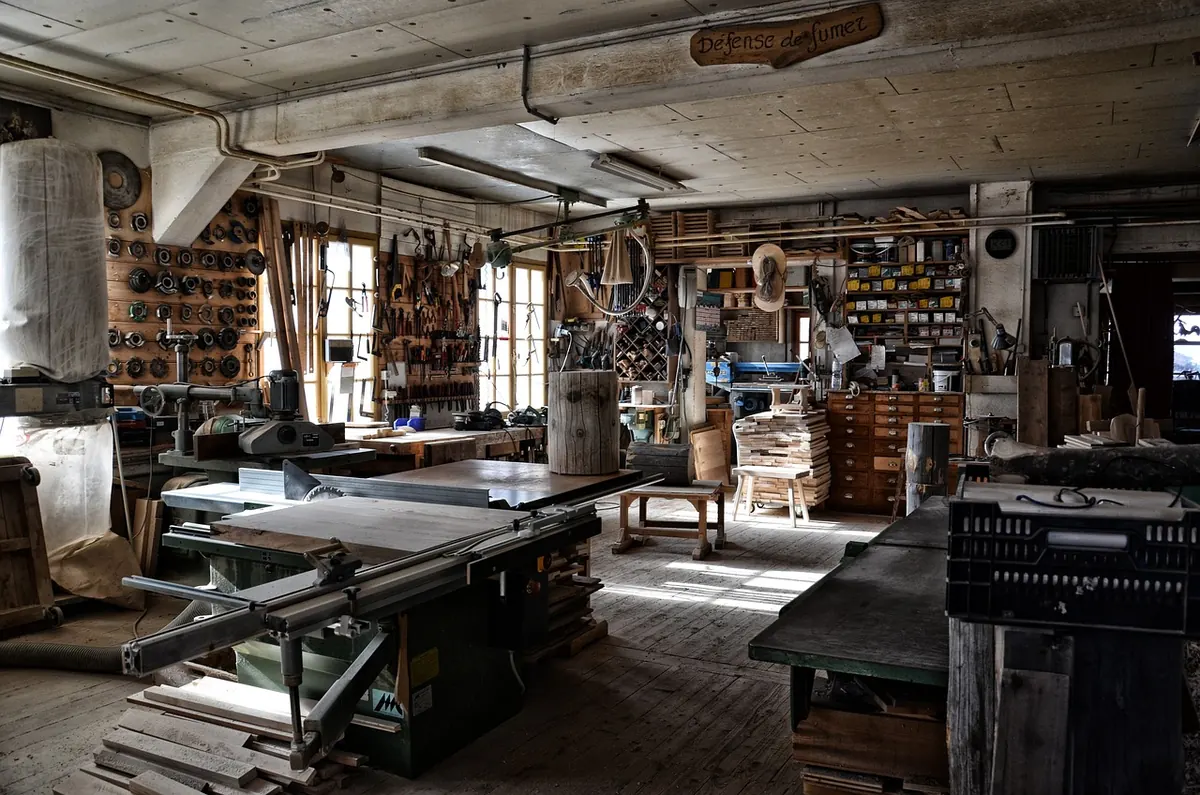
Most prototypes are solved with whatever material is already within reach. The joiner's offcut bin, the sign maker two units along the estate, the skip outside a shop refit — in the UK these are the cheapest and often the quickest sources of genuinely interesting stock. Together they add up to a local materials library, if you treat them as one.
The difference between a library and a pile is small but real: a scope, a source list, a labelling habit, and somewhere to record what you have. None of it needs a budget. It needs a day to set up and a few minutes a week to keep going.
Decide the scope before you collect anything
Libraries fail because they accept everything. Start by naming four to six material families you expect to prototype with over the next year — sheet timber, acrylic, aluminium, textiles, foam, cable, card. Anything outside that list gets politely declined, or passed on to someone who can use it.
Then split the collection in two. A sample library holds small, flat pieces for handling, testing and showing clients. A stock library holds usable quantities. Both matter, but they need different storage, and mixing them is how a tidy shelf becomes a heap.
Where UK materials actually come from
Trade offcuts and nearby workshops
Small workshops generate consistent, clean, single-material waste, and they usually pay to have it taken away. The regulars worth visiting:
- Sign makers and printers — acrylic, polycarbonate, foam board, vinyl, backing board.
- Joiners and kitchen fitters — ply, MDF, hardwood offcuts, worktop remnants.
- Metal fabricators — sheet, tube, angle, perforated plate.
- Upholsterers — foam, wadding, webbing, fabric, leather scraps.
- Glaziers — small panes, mirror, laminate.
- Electricians and network installers — cable drums, conduit, trunking.
- Bike shops — inner tubes, chains, spokes, packaging.
Scrapstores and community reuse
Scrapstores collect surplus from businesses and sell it on, often by membership, to schools, artists and makers. There is a long-standing network of them across the UK, and they are an excellent shortcut to a varied starting stock. Alongside them, Freegle, Freecycle and local "buy nothing" groups work well at household scale, and many household waste recycling centres now run reuse shops.
Salvage yards, demolition and architectural reclaim
Salvage yards are the place for timber, bricks, tiles, ironmongery and the odd sheet of something you cannot buy new. Ask demolition contractors about non-structural material before the skip arrives; timing matters more than charm. Bear in mind that reclaimed timber can carry old finishes, so treat it as a material to inspect rather than one to sand on a whim.
How to ask so people say yes
The approach that works is boringly consistent. Turn up in person, in the middle of a quiet afternoon rather than at the end of the day. Say what you want specifically. Offer something back — a fixed weekly collection slot, storage crates, a bit of help with a job, a name on their list.
We run a small prototyping workshop nearby and we're building a materials library. We're after offcuts of [material], anything from [size] upwards. If it helps, we can collect every [day] and bring our own boxes.
What you should not do is help yourself. Taking from a skip without permission, or leaving a yard in a worse state than you found it, will close a source permanently.
Storage and labelling that survives a busy week
Vertical racking beats horizontal stacking every time, because you can see the whole library without lifting anything. Clear boxes in one consistent size keep small stock visible and mobile. Sample pieces can live flat in a plan chest, a set of shallow drawers, or a few well-labelled archive boxes.
Every item needs a label, and the label needs six things on it:
- Material, in plain words.
- Dimensions and thickness in millimetres.
- Quantity or approximate usable area.
- Source and the date it arrived.
- Location code — rack, shelf, box.
- Condition, and any known finish or coating.
Masking tape and marker pen fade within months. Printed labels, or luggage tags tied to bundles, last far longer and cost very little.
A catalogue you will actually update
One shared spreadsheet is enough. Columns for material, dimensions, quantity, source, date in, condition, location code and a photo. Photograph new stock once, on a plain surface with something alongside for scale, and attach the image to the row. If it is not catalogued, it is not in the library — that rule alone prevents most of the waste.
Keep a wish list visible on the wall. It tells visitors what to look out for, and stops the library drifting towards whatever happens to arrive.
Safety and waste rules worth knowing
Unknown materials deserve caution. Do not sand or machine old painted timber unless you know what the finish is; older paints can contain lead, and it is the dust that causes the problem, not the board. Use extraction and suitable protection, and leave anything you cannot identify on the shelf.
There is a paperwork side too. If you take material from a business that would otherwise be waste, duty-of-care rules may apply, including waste transfer notes and possibly registration as a waste carrier. Check with your local authority or the environmental regulator for your nation — the Environment Agency in England, Natural Resources Wales, SEPA in Scotland, or NIEA in Northern Ireland. If you end up storing quantities of foam, solvents or other flammables, tell your insurer.
Keeping it alive
A library only works as a habit. Pick one collection day a week and stick to it. Spend ten minutes at the end of each session returning stock and re-labelling. Clear out anything untouched for a year — pass it to a school, a scrapstore or another workshop rather than keeping it "just in case". Put one person in charge, with a rota for the dull jobs.
Done that way, a local materials library pays for itself the first time someone builds a jig from a piece of ply that was heading for a skip.
Photo: ThMilherou / Pixabay

Ideation Without Burnout: A 30-Minute Team Warm-Up
A practical 30-minute warm-up for tired teams who need useful ideas without the pressure of a full...
7 Signs Your Prototype Is Too Complicated
Seven practical warning signs that your prototype has become too complex for useful user testing, plus a...